My research lies at the intersection of development economics and political economy, with a focus on governance. I study how the organization of the state affects public service delivery, political accountability, and environmental outcomes. I currently work on Uganda and Bolivia, using administrative and satellite data combined with quasi-experimental designs.
A second strand of my research focuses on agricultural technology adoption in Sub-Saharan Africa, particularly in livestock production. I am currently working on a joint project studying how the adoption of improved practices and livestock breeds in Uganda affects farm incomes and environmental outcomes.
Before starting my PhD, I worked as a Pre-doctoral Fellow with CGIAR/SPIA at PSE. I previously held research assistant positions at the Inter-American Development Bank and the Institute of Socio-Economic Research at the Bolivian Catholic University. I hold an MSc in Economics from the University of Warwick, where I studied as a Chevening Scholar, and a bachelor's degree from the Bolivian Catholic University.
Research interests: Development Economics, Political Economy, Environmental Economics.
Research
Working Papers
Job Market Paper
Bringing Services Closer to People? Distance to Administrators and the Reach of the State
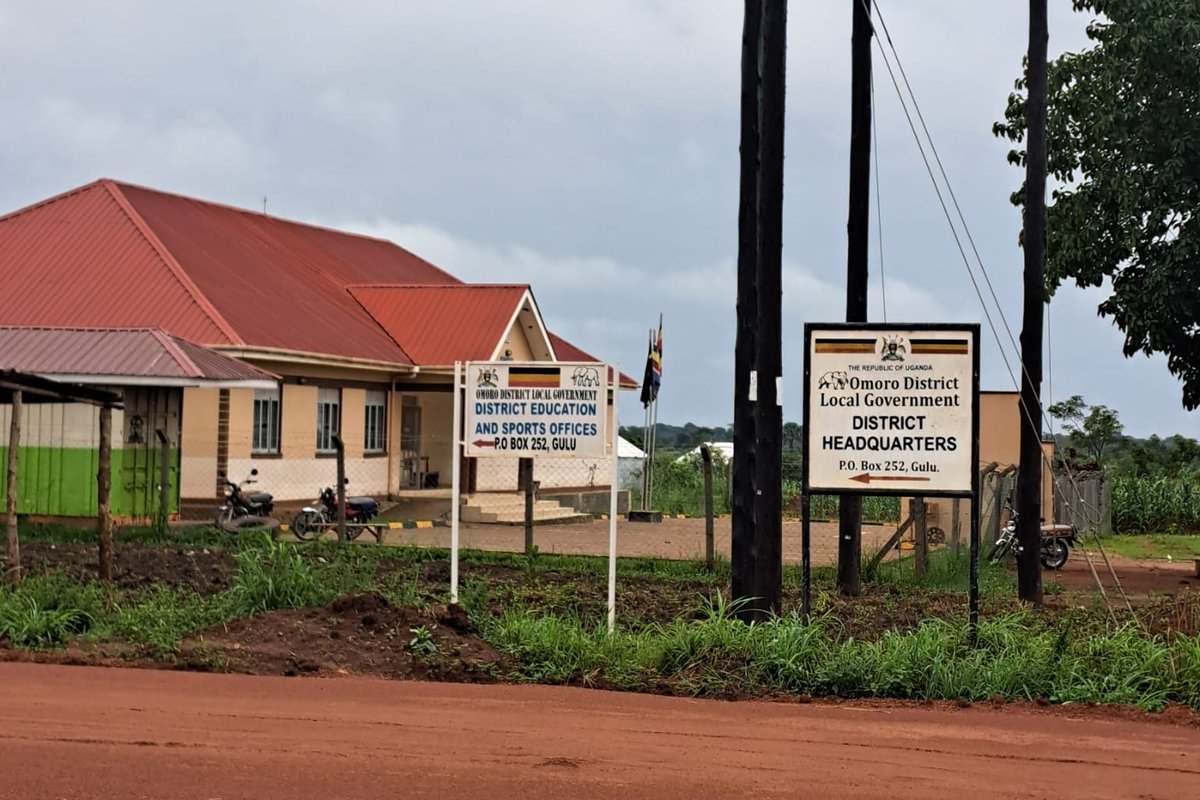
As populations grow, extending the reach of the state to a larger and more dispersed population becomes increasingly challenging. Many developing countries have responded by creating new subnational administrative units, bringing local administrators physically closer to citizens. Leveraging an episode of district proliferation in Uganda, this paper studies whether geographical proximity to local government administrative centers improves access to public goods and services and changes citizens’ engagement with government. To establish causality, I exploit a policy implementation rule that generated exogenous variation in households’ proximity to new district headquarters. Households living closer to these centers have significantly better access to electricity, roads, health facilities, and water sources. Proximity also shifts engagement from contentious to participatory channels and reduces direct experiences of corruption. Despite these gains, proximity does not increase trust in government or improve democratic perceptions, including in politically aligned districts where engagement effects are stronger. Finally, each district split raises transfers to the pre-split district territory by roughly 14 percent, with most of the increase concentrated in administrative expenditures rather than service delivery budgets.
Omoro District headquarters, Uganda, 2024.
Presented at: PacDev 2026 (UC Davis), STEG Annual Conference and Theme Workshops 2026, Vancouver School of Economics Development and Political Economy seminar, European Doctoral Programme Jamboree 2024 (UPF), 12th Warwick PhD Economics Conference, 2nd Essex PhD Economics Conference, AFEDEV International Conference on Development Economics 2023, 14th Bolivian Conference on Development Economics, PSE Development and Political Economy seminar.
Bottom-up Conservation: Sub-national Protected Areas and Local Governance in Bolivia
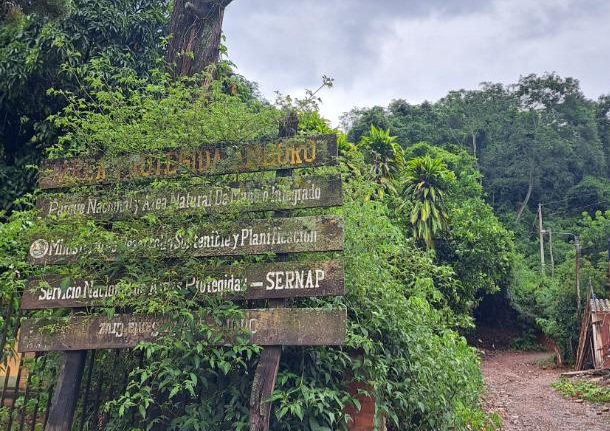
Protected areas are central to global conservation policy, yet evidence on decentralized forest conservation remains limited. In many countries, local governments can designate protected areas while national governments retain authority over land allocation. This paper studies what happens when the authority to protect land is decentralized but the authority to allocate it is not. Combining annual land cover data, parcel-level titling records, and nearly 99,000 judicial rulings, we study Municipal Protected Areas in Bolivia using staggered difference in differences. We find that designation modestly reduces deforestation but does not prevent national land titling. In protected areas without indigenous territories, titling of commercial and medium-sized properties triples after designation, while small property titling remains unchanged. Titled land is subsequently cleared at similar rates inside and outside protected areas. Titling is initiated by private claimants and faces little apparent legal contestation, with no judicial ruling challenging titles granted inside municipal protected areas. Where protection overlaps indigenous territories, titling does not increase, and the national land agency defends indigenous tenure in court. These findings suggest that indigenous territorial rights provide an institutional constraint on national land allocation that is absent under municipal protection alone.
Protected area sign, Bolivia, 2025.
Presented at: 6th AFEDEV International Conference on Development Economics, 3rd AFÉPOP Annual Conference, 20th Biennial Conference of the International Association for the Study of the Commons, 14th Bolivian Conference on Development Economics 2024, Forest and People Conference 2024, PSE GPET seminar.
Democratization of Justice and Checks and Balances in Bolivia
Abstract
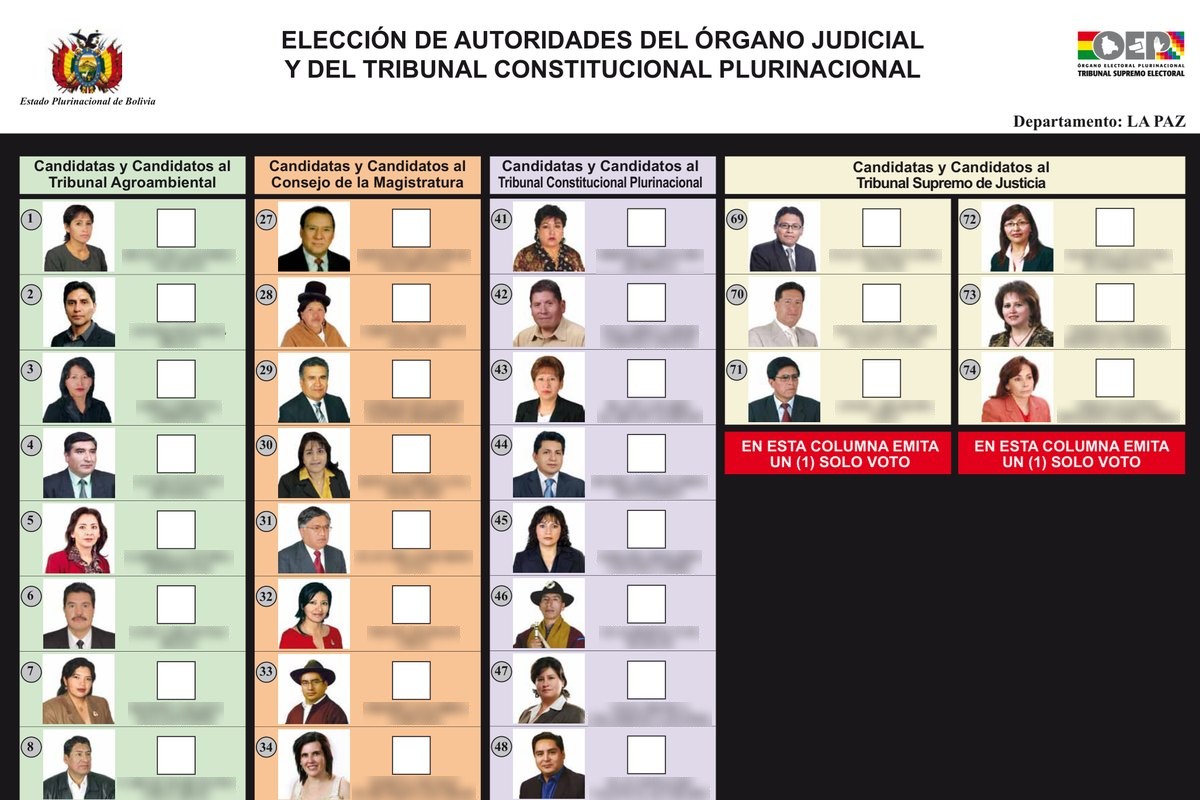
In 2011, Bolivia became the first country to select its highest court judges by popular vote, aiming to democratize justice and strengthen judicial legitimacy. This paper studies whether the reform affected the courts’ capacity to check the executive. Using the universe of high-court rulings since 2000, I compare outcomes in politically sensitive cases before and after the reform in a difference in differences setting. Preliminary findings suggest that, after the reform, the constitutional court became more likely to rule in favor of the government in cases where political power is directly at stake, including removal from office and electoral disputes. In the criminal chamber of the supreme court, appeals filed by accused public officials became more likely to be admitted and to succeed. These patterns are not present before the reform and become stronger under the second cohort of elected judges. Taken together, the evidence suggests that the popular election of judges, combined with government control over candidate pre-selection, may have facilitated political capture rather than strengthened checks and balances.
Ballot for the 2011 judicial elections, La Paz department. Cropped for size and shown for illustration only (it does not include all candidates). Candidate names blurred to preserve anonymity.
Presented at: PSE GPET seminar.
Work in Progress
Turkish Soap Operas and Intimate Partner Violence in Peru
Livestock Intensification, Structural Transformation, and Environmental Spillovers
While property rights interventions have been a dominant way to redistribute costs and benefits from forests and address conservation challenges especially in working forests, the evidence of their effectiveness to date remains sparse. In this paper, we address this gap by providing rigorous evidence of the impacts of two such interventions: the establishment of commercial logging rights and voluntary market-based certification, specifically certification by the Forest Stewardship Council (FSC). Applying rigorous difference-in-difference methods for staggered treatment designs, we use data from 15 tropical countries, where we conducted synchronized research (meta-keta) aligned with each country’s specific theory of change. We show that the establishment of logging rights does not exacerbate forest loss. We find limited evidence of FSC’s impacts on stalling forest loss. However, we note the significant heterogeneity by colonial past and economic development stage. Further, we demonstrate the importance of controlling for country specific covariates based on each country’s theory of change. Our work has important implications for the design and implementation of global conservation and development interventions.
An Unlikely Shield: Informal Settlements and Political Violence in Peru
Measuring Livestock: A Review of Data Gaps and Methodological Opportunities for Livestock Data Collection in Household and Agricultural Surveys
50x2030 Working Paper Series, 2025
Abstract
This review identifies key data gaps and methodological challenges in collecting data on livestock in the context of household and agricultural surveys, with emphasis on livestock enumeration, product quantification and valuation, and labor. Drawing on consultations with international experts and stakeholders, as well as a review of nine prominent survey instruments, including those from the 50x2030 Initiative, the Living Standards Measurement Study–Integrated Surveys on Agriculture (LSMS-ISA), and the Agricultural Integrated Survey (AGRIS), the review highlights critical gaps in measuring live weight, milk production, by-products, and gender-disaggregated labor in addition to revealing limited or inconsistent coverage in critical areas such as herd dynamics, livestock systems, feed, and animal health. The review also indicates emerging methodologies, including digital apps, AI-powered computer vision, mechanized tools, and remote sensing, and discusses their feasibility for integration in large-scale household and agricultural survey operations. The objective of the review is to inform future methodological research efforts aimed at validating scalable and cost-effective innovations for improved livestock data collected through national agricultural surveys, such as those supported by the 50x2030 Initiative.
Referee — Journal of Development Economics; Latin American Journal of Economic Development (LAJED); EAYE Annual Meeting 2026; Bolivian Conference on Development Economics 2026.
Seminar organization — Development Economics Seminar, Paris School of Economics, 2024–25.
Affiliations — American Economic Association (AEA); European Economic Association (EEA); Latin American and Caribbean Economic Association (LACEA); Association Française d’Économie du Développement (AFEDEV); Association Française des Économistes de la Population (AFÉPOP); Bolivian Society of Economists (SEBOL), elected member of the board of directors, 2024–2026.
Teaching
Paris School of Economics
Econometrics 2: Treatment Effect Models — Teaching Assistant, M1 Public Policy and Development (PPD), 2023–24 and 2024–25. PPD Teaching Prize for Best Teaching Assistant, 2023–24. Topics: potential outcomes, RCTs, IV, RDD, DiD, matching; applications in R.
Universidad Católica Boliviana
Macroeconomics II (Econ 223) — Lecturer, 2020. Topics: consumption and investment, open economy, money and inflation, Phillips curve, debt sustainability, growth.
General Economics (Econ 101) — Lecturer, 2017–2018. Topics: supply and demand, consumer and producer theory, national accounts, growth.
Econometrics I & II — Teaching Assistant, 2014–2015. Topics: linear regression and inference; time series.
Macroeconomics I — Teaching Assistant, 2013–2014. Topics: national accounts, IS–LM, growth models.
General Economics — Teaching Assistant, 2012. Topics: principles of micro and macroeconomics.
Short courses
Multidimensional Poverty — Universidad Católica Boliviana, 2017.
Introduction to Stata Programming — Universidad Mayor de San Andrés, 2016.
Household Surveys and Applications in Stata — Universidad Católica Boliviana, 2016.